
Underpinning
Piled Underpinning

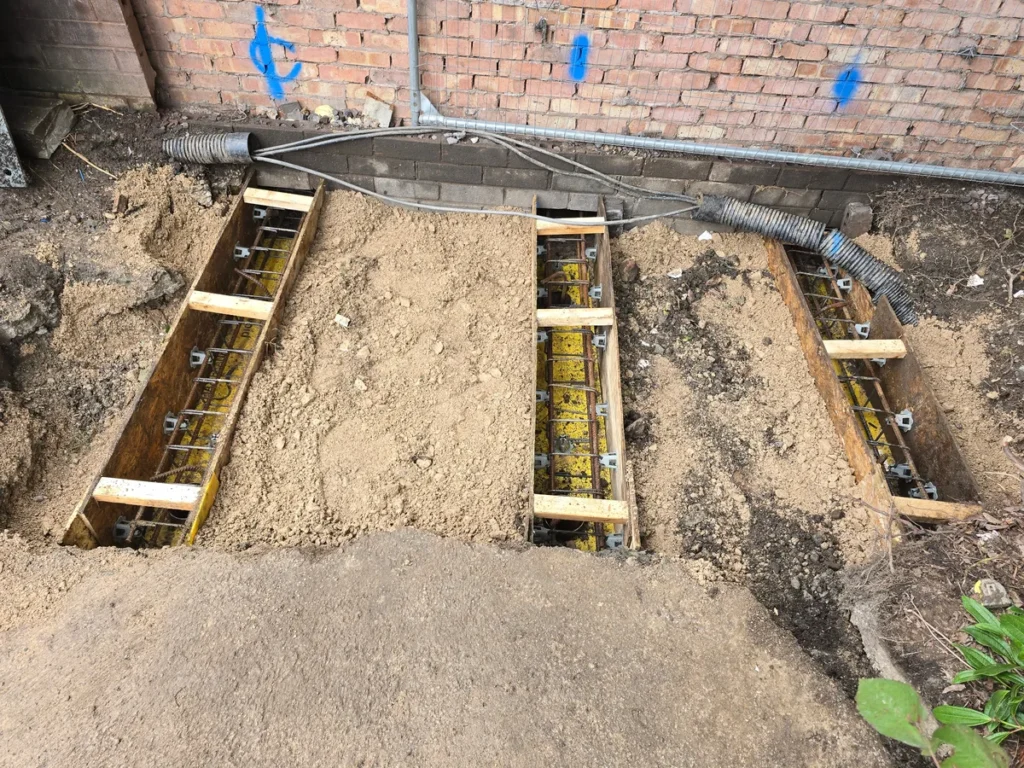
A single story building was subsiding in Rochdale. Here we have piled it from the outside as the inside was inaccessible. There is heave protection under the reinforcement as there are trees nearby.
One of these piles went 15 metres deep with most of them going around 10 metres.
We then concrete, using the mix specified by the structural engineer. The concrete is vibrated down the piles and to remove any trapped air.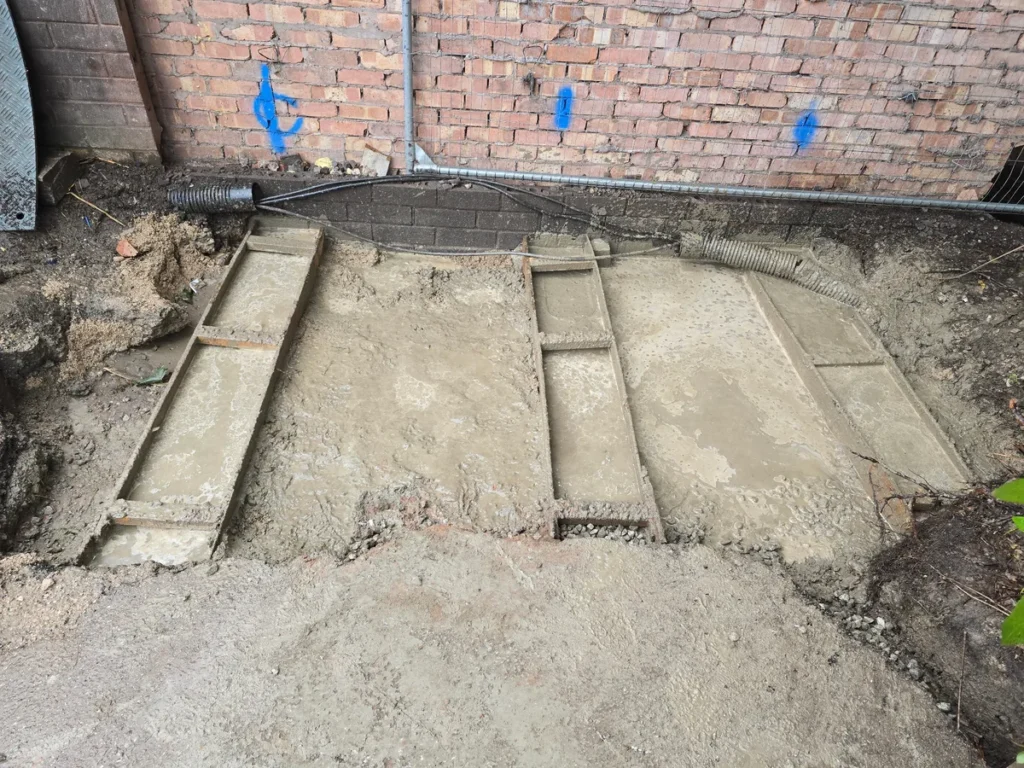

Mass Fill Underpinning
Mass fill underpinning is digging down under your existing foundations to get to good ground. Ideally a test hole has been dug so you know how deep you are going to be digging, but if good ground is too deep then you are better off going for piled underpinning. Say you know good ground is a metre down from ground level such as this job in Wigan, then mass fill is the way to go.
So sections are dug out, usually a metre wide and down to the good ground. They are then inspected before concrete is poured. Here the building inspector wanted mesh in the bottom as you can see, and the bars sticking out from both sides have been resined into the earlier excavated and concreted sections to aid with binding the separate sections of concrete together.
Specialists in underpinning throughout the North West
Located in Darwen, close to Blackburn, Lancashire, we cover the entirety of the North West. Contact us and I will tell you the best course of action from whatever stage you are currently at.
Foundations not suitable to support the load of your structure? Underpinning could be the answer. Contact FirmBase Piling on:
Underpinning FAQ's
How much does underpinning cost?
There’s no way that you can give a blanket price. With piled underpinning you don’t know how deep the piles will go, although with the one shown in Preston above, after checking the local borehole records we got a pretty accurate idea beforehand, but that isn’t always the case. Price is also determined by if the underpinning is being done from one side and what needs to be broken out first. With mass fill underpinning, in order to give a price, trial holes needs to be dug first, to get an idea of the depth of good ground. It can also be unproductive as you have to can only dig out certain sections each time before it needs to be inspected and filled with concrete.
How much of my house needs to be underpinned?
If your house or any building has subsidence, it first needs to be determined what has caused it. Often it is just bad ground, but it can also be due to a leaking drain or it could just be historical subsidence which needs monitoring and may never go any further. Whatever the reason, you are better off getting a local structural engineer out to take a look and tell you the best course of action. They are usually impartial and will be considering a whole range of potential causes that their experience and qualifications have taught them to spot.
What is differential settlement in terms of underpinning?
This is when 2 different foundation types move up and down at different rates and this is when cracks appear. This is why it is all the more important to get a structural engineer out and tell you the best course of action. It is always better to have one foundation type, so if your house is on a standard foundation and the underpinned part is on piles, then it is not ideal. But if it is only one wall of a house, you obviously don’t want the expense of underpinning the whole building. So a practical decision is then designed.
Is underpinning safe?
Although at times, it doesn’t look the best, the way you go about underpinning makes it as safe as possible. Piled underpinning is safer as you are only knocking out small pockets usually just in the existing wall, below the underside of the floor make up, about every 1.5 metres apart as shown in the job we did at Preston above. With mass fill underpinning, you usually dig in 1 metre wide sections, ideally leave 2 metres, then another 1 metre section and so on, which means the building is still well supported. The weight transfers at an angle of 45 degrees so the amount of weight unsupported over that metre wide section is quite small.
Do i need a structural engineer to look at it my house before any underpinning is carried out?
YES if you want it done right.
